Transform Your Club’s Financial Planning with Driver-Based Forecasting

Transform Your Club’s Financial Planning with Driver-Based Forecasting

Running a youth sports club means balancing registrations, coaching schedules, facility costs, and marketing, all while keeping an eye on your bottom line. Yet too many organizations rely on static budgets and manual spreadsheets, leading to surprise shortfalls, misaligned staffing, and reactive decisions. Driver-based forecasting changes the game by linking your core operational metrics directly to your financial model, giving you real-time visibility, scenario-planning power, and the confidence to steer your club strategically.


Why Static Budgets Fall Short

  • Uniform assumptions ignore program-specific dynamics. One flat growth rate applied across all teams can mask underperforming or overbooked activities.
  • Time-consuming updates. Every time registrations shift, finance teams wrestle with complex formulas, often introducing errors and eating into valuable hours.
  • Limited “what-if” analysis. Testing scenarios, like a 10% drop in spring enrollments, could require rebuilding the forecast from scratch, delaying strategic response.

These gaps force your organization to chase variances instead of proactively managing resources, impacting both margins and member experience.


What Is Driver-Based Forecasting?

Driver-based forecasting transforms your budget into a living model by:

  1. Identifying key drivers. Registration counts, membership tiers, coaching hours, equipment rentals, and more.
  2. Defining unit economics. Assign average revenue and cost assumptions to each driver (e.g., fee per registrant, coach cost per hour).
  3. Mapping to your chart of accounts. Ensure each driver flows directly into the appropriate revenue and expense lines, so forecasts and actuals align seamlessly.
  4. Automating inputs. Integrate registration platforms or data feeds so your financial model updates instantly when enrollments change.

Building Your Flexible Forecast Model

  1. Map existing data sources. Inventory where enrollment, fees, and staffing data currently reside, whether in spreadsheets, registration software, or accounting tools.
  2. Select impactful drivers. Focus on metrics that move the needle: program-level sign-ups by age group, tier upgrades, and add-on services.
  3. Design a clean model structure. Use a dedicated driver table that feeds into your budget template so that you can dynamically change inputs.
  4. Enable automation. Set up API connections or scheduled CSV imports from your registration system to keep driver inputs up to date.
  5. Validate and refine. Back-test the model against recent actuals to calibrate assumptions before going live.
  6. Multiple scenarios. Create side-by-side scenarios so you can compare forecasts seamlessly. This allows for “what-if” scenarios and planning for various levels of financial success.

Essential Tools for Seamless Reporting

While Excel can serve as an initial pilot, consider solutions designed for driver-based planning that:

  • Sync automatically with both registration platforms and accounting systems.
  • Offer built-in scenario planning and what-if analysis without complex formulas.
  • Provide dashboards tailored for coaches, program directors and board members so everyone sees the metrics that matter and the goals of the organization.

Embedding Continuous Improvement

Driver-based forecasting delivers its full value when it becomes part of your regular rhythm:

  • Monthly forecast reviews. Compare actuals vs. forecasts, discuss driver variances, and agree on adjustments.
  • Quarterly assumption updates. Refresh fee levels, coach rates, and staffing ratios based on season-to-date performance.
  • Shared visibility. Empower program leaders with snapshot dashboards, so they can act on enrollment trends in real time.

Conclusion

Driver-based forecasting moves your club from reactive firefighting to proactive strategy. With automated data feeds, dynamic models, and aligned reporting, you can optimize staffing and resource allocation all season long.

Ready to build a financial model that grows with your organization?

Start the conversation today.

True Financial Clarity: How Youth Sports Clubs Gain Real-Time Insights and Drive Growth

True Financial Clarity: How Youth Sports Clubs Gain Real-Time Insights and Drive Growth

Managing a youth sports club means balancing coaching, tournaments, member outreach, and volumes of transactional data. When financial reports arrive weeks after the month-end, leadership operates with delayed information, which makes it difficult to quickly take corrective actions.

Unexpected cost overruns, enrollment dips, and budget variances can catch you off guard, undermining growth or allocating resources to ineffective programs.

In this post, we’ll walk through a blueprint for achieving financial clarity: from structuring your accounts to empowering every team member with their own dashboards.


1. Centralize Your Financial Infrastructure

Fragmented accounting and operational systems breed reporting delays and potentially financial uncertainty. We suggest youth sports clubs build a solid accounting and operational foundation that achieves the following:

  • Integrates all transactions into one accounting platform, including membership fees, sponsorship payments, and vendor expenses. In such an environment, data should flow automatically and seamlessly from operational to financial systems so that there is no confusion about the source of truth for critical data.
  • Align your chart of accounts and reporting dimensions with programs, locations, and cost centers. This ensures that every transaction maps to the right tournament, team, or event.
  • Automate data syncs between your operational systems with the accounting system to reduce or eliminate manual exports and uploads.
  • Create financial reports that align budgets and forecasts with the accounting results to streamline analysis after each month-end close.

Benefit: Centralization cuts manual reconciliations, freeing staff to focus on strategy rather than spreadsheets.


2. Design Driver-Based Budgets and Forecasts

Static, line-item budgets can quickly feel outdated. Instead, lean on the same dynamic approach:

  • Map your true revenue drivers month-over-month. Capture not just total registrations, but the levers behind them, ad spend, event outreach, sponsorships, even conference meetings. In practice, you’d:
    • Pull in your marketing spend as a distinct input (for example, “Ad dollars” colored blue so it’s never buried in a formula).
    • Show that toggling ad spend on/off immediately shifts your projected revenue for that month by linking ad dollars to month-over-month revenue changes.
    • Surface the story in your slides or investor packet: “When we paused ads in April, revenue dipped 8%, and resumed when ads restarted in May.”
  • Adopt trigger-date inputs for timing-sensitive drivers.
    • Define when a new program, pricing tier or sponsorship kicks in, then let your model automatically shift revenue accordingly. As Matt did with the pre-seed SaaS example, if your subscription launch moves from April 1 to June 1, revenue simply flows out two months later, no manual rewiring required.
    • Use the same approach for evolving metrics like CAC: set a “Date ≥ Jan 1 2026 → CAC = $25,” and let the formulas handle the rest.
  • Build in scenario analysis around three core inputs: time, price, and volume.
    • Time: When will each driver come online? (Registration opens, coach clinics launch, sponsorship renewals.)
    • Price: Will average program fees change mid-season? Color these cell inputs for clarity.
    • Volume: How many registrations, coaches or sponsors do you expect? Twist this up or down to see immediate impacts.
  • Together, these let you model “What if spring registrations drop by 15%?” or “What if a key sponsor delays payment by a month?” in seconds, ran multiple “what-if”s on advisor numbers and software features.

Benefit: By anchoring every forecast to discrete, easily-tweakable drivers, month over month, your club moves from guesswork to data-driven story-telling. You’ll back up each recommendation (“pause ads,” “add a sponsorship tier,” “delay new program launch”) with instant, numbers-based evidence, empowering proactive decisions instead of reactive firefighting.

The Financial Model That Gets You Funded: Build Investor-Ready Projections for Pre-Seed to Series A


3. Activate Live Financial Dashboards & Empower Coaches and Managers

Turn raw data into clear visuals and actionable ownership across your club:

  • Custom, role-based views: Design dashboards that filter by club, program, location or coach, so each stakeholder sees exactly what matters to them. A program director can view spring registrations vs. budget, while the head coach monitors equipment spend in real time.
  • Instant variance alerts: Configure alerts for revenue dips or expense spikes beyond set thresholds, and route them directly to the responsible manager’s dashboard. For example, if a team’s uniform costs exceed budget by 10%, the equipment manager is notified immediately to investigate.
  • Drill-down analysis without Excel: Let managers click through anomalies, say, a sudden drop in membership fees, and see the underlying transactions. No more manual exports; just one click to trace an unexpected enrollment dip back to its source.
  • Embedded P&L ownership: Give each program leader access to their own P&L dashboard with relevant metrics, revenues, costs, and net performance. When a youth soccer leader can see their program’s profitability live, they can adjust recruitment or pricing on the fly.
  • Real-time budget adherence: Empower managers to monitor their budget vs. actuals throughout the season. If a registration drive underperforms, they can compare planned vs. actual driver inputs (e.g., ad spend, event fees) and recalibrate strategy before month-end.
  • Collaborative accountability: By putting dashboards directly into the hands of every stakeholder, you elevate financial ownership across the organization. Program leaders aren’t just executing programs, they’re owners of their financial outcomes, driving smarter decisions and stronger growth.

4. Streamline Month-End Close

A drawn-out close cycle delays insights and ties up your finance team. To compress the close time to 3–5 days:

  1. Embed weekly checkpoints throughout the month. In these touchpoints, ensure that transactions are posted to the general ledger throughout the month, journal entries are timely reviewed, and key transactional accounts are reconciled.
  2. Automate reconciliations for key accounts, bank, credit card, and sponsorship receivables.
  3. Provide clear task lists and status dashboards to every team member involved.

Benefit: Faster closes mean leadership gets timely reports, enabling quicker corrective actions and more strategic planning.


By centralizing your financial systems, designing driver-based forecasts, activating live dashboards that equip coaches with their own P&L views, and compressing your month-end close, you transform finance from a rear-view exercise into a forward-looking growth engine. Youth sports clubs gain the agility to reallocate resources, adjust tactics mid-season, and keep every stakeholder aligned on real-time performance.

If you’re ready to eliminate surprises and lead your club with confidence, start the conversation.

Lavoie + Bespoke Sports & Entertainment

Lavoie + Bespoke Sports & Entertainment

Scale with Confidence

Discover how Bespoke Sports & Entertainment leveraged strategic financial planning to become an award-winning powerhouse in just a few years. Learn actionable insights to scale your business effectively.

This field is for validation purposes and should be left unchanged.

“It’s simple, Lavoie helped us create the infrastructure we needed. From setting up accounts payable and HR policies to recommending affordable technology, Sharai Lavoie and her team were there to give us the day to day insights we needed to keep cash flowing, flexibility to focus on sales, and proactive recommendations that enabled us to scale at the right pace.”

Mike Boykin, Bespoke’s CEO and Cofounder

Client

Bespoke Sports & Entertainment

Industry

Sports Marketing

In the high-stakes arena of sports and entertainment marketing, visionaries like Mike Boykin and Greg Busch of Bespoke Sports & Entertainment don’t just compete—they revolutionize. With over 50 years of combined industry experience and a roster of elite clients, Boykin and Busch knew that launching their Charlotte-based agency in 2014 would require more than just their proven expertise. To truly disrupt the market and compete with global giants, they needed a financial backbone as innovative as their marketing strategies. Enter Lavoie CPA, the catalyst that transformed Bespoke from a startup with potential into an award-winning powerhouse. This case study reveals how Lavoie’s tailored financial strategies became the hidden playmaker in Bespoke’s journey to the top of the sports marketing league.

The Client

Bespoke Sports & Entertainment, founded in 2014 in Charlotte, NC, is a sports and entertainment consulting and experiential marketing agency. They help brands select the right partnerships and maximize their sponsorship investment. With a collective of experienced marketers, Bespoke provides thoughtful senior-level counsel and custom marketing solutions tailored for individual brands.

The Challenges

As a new venture, Bespoke’s founders knew they needed more than just an accountant to supervise their financial stability. They required a financial strategist who could confidently run major investor meetings, take control of the company’s future, manage expenses, and augment human resource needs. To compete with some of the largest agencies in the world, they needed a foundation that included a roadmap for profitable growth while keeping the company’s vision and workforce top of mind.

The Solutions

Lavoie CPA stepped in to provide comprehensive financial support from day one. Their services covered a wide range of critical business functions, including supplementing fractional CFO duties and setting up essential financial processes like accounts payable and receivable. The Lavoie team took charge of human resource tasks such as onboarding new employees and running payroll, ensuring Bespoke could focus on their core business. Regular reporting on projections and cash flow provided valuable insights for decision-making, while operational technology recommendations and adoption streamlined processes. Perhaps most crucially, Lavoie CPA developed a living financial strategy critical for investor meetings, forecasting, and future loans, laying the groundwork for Bespoke’s continuous growth.

Successful Outcomes

With Lavoie CPA’s support, Bespoke was able to achieve significant milestones in their business development. They created the necessary infrastructure for growth, ensuring a solid foundation for their operations. The partnership enabled Bespoke to keep cash flowing effectively, maintaining the financial health of the company. This financial stability, combined with Lavoie’s handling of back-office tasks, allowed Bespoke’s team to maintain flexibility and focus on sales and client relationships. As a result, Bespoke was able to scale at the right pace, avoiding the pitfalls that often challenge new businesses. Moreover, the strategic financial roadmap developed by Lavoie provided a clear path for future growth, positioning Bespoke for long-term success in the competitive sports and entertainment marketing landscape.

In Summary

Bespoke Sports & Entertainment engaged Lavoie CPA to build a strong financial foundation from the ground up. This partnership allowed Bespoke’s founders to focus on their core business while Lavoie handled the critical financial and operational aspects necessary for success in the competitive sports and entertainment marketing landscape.

If you’d like to explore how Lavoie can help your business build a foundation for success, set up a consultation today.

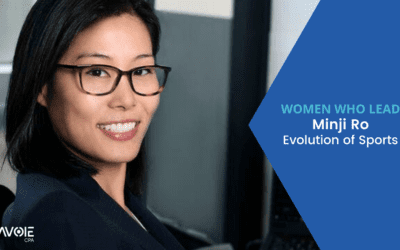
Women Who Lead: Minji Ro with Evolution of Sports

Women Who Lead: Minji Ro with Evolution of Sports

Each #WomenWhoLead feature will be showcased on a wall mural in South End Charlotte. If you know a woman leader who you want to feature on the wall, please click the button to nominate her.

Minji Ro is not who you would expect to see on Wall Street. She’s Asian, gay, and a woman. But she’s never been too interested in maintaining the status quo. 

Ro, who studied mathematical methods at Northwestern University, worked in sales and trading for over a decade. She started her career as an analyst at Merrill Lynch in 2006 but left eight months later for a position at Goldman Sachs in part because of the homophobia she encountered. 

In the years to come, Ro would focus on helping the underdog— recruiting and mentoring other young professionals who didn’t fit the white, heteronormative mold. In 2016, she partnered with coworker Bill Shelton to provide career coaching to professional athletes who would soon be transitioning out of their sport. The program was so successful that both Ro and Shelton quit their day jobs three years ago to make it a full time endeavor. 

Ro is now the Co-Chief Executive Officer of Evolution of Sports, an organization that works to change the future of athletes all around the world. Ro also co-founded Parity, an online marketplace that matches professional women athletes with social media marketing opportunities. Ro took time out of her busy schedule to talk basketball, equity and inclusion, and progressive workplace policies.       


You’re an avid basketball player — a four-time rec champion, no less. Have you played basketball your whole life?

Yes! I started playing when I was five. I was never good enough to make a go of it and I didn’t have the financial means to really take it seriously. I was also a huge nerd. But I continued to play in high school and then I played on the club team at Northwestern University. I continued to play as an adult in the New York City Gay Basketball League. I think it’s the greatest sport ever. 


Why do you think basketball is the greatest sport ever?

Basketball is nearly non-stop. There’s always something happening and it’s relatively straightforward. You try to get the ball into the hoop — that’s it. 


What skills has basketball taught you that you’ve taken off the court and into the office?

There’s a bunch of research that shows how a huge percentage of women CEOs and executive leaders have played sports. So that question is spot-on — there are many parallels between sport and work. Basketball, for instance, is a team sport. There are positions on the court. Every player has a job and every job is different. Being good at basketball can mean a lot of different things. You need somebody who’s very tall. You need somebody who’s dedicated to defense. You need somebody who’s going to be vocal and organize everything. Basketball and work are alike in that you don’t want five of the exact same person on your team. Intelligence comes in a lot of different forms and understanding the ideal mix of people is key. 

In NYC Gay Basketball League, you volunteer to be a captain and, if you’re a captain, you draft your team. So on draft day, all the new players come into the gym and run a bunch of drills. All the captains are there watching to see what those players’ different skills and styles are. You can see people’s personalities come through in terms of how they play.

When it was time to draft your team, people had all different strategies. Some people only picked their friends. I took a totally different approach even though it was just rec, because I wanted to win.  So I always tried to draft the best available players who played team basketball. 


Circling back to your last answer, you mentioned that women who play sports are more likely to fill senior leadership positions. Why do you think that is?

90 percent of women C-suite execs played sports at some point in their lives and more than half played sports at the college level. As to why, I would say that being on a team and understanding what that means is valuable in most professional settings. If you’re a CEO, by definition, you’re running a company. You’re working with a bunch of different people and trying to figure out how to work towards a shared goal.

Second, you’re always being coached as an athlete. You’re always getting feedback. There’s always somebody telling you how to be better. I think people who can receive feedback and grow from it are probably more likely to succeed anywhere in life. 

Lastly, I think women who play sports are likely to have a shared interest with men. Professionally, senior-level roles are still mostly male-dominated so I would imagine playing sports helps women network with men. It gives you something to talk about and makes you approachable. Networking is a big factor in helping people have successful careers. 


Tell me about Evolution of Sports. How did that organization start?

I founded Evolution of Sports with my co-CEO. He’s my BFF and we’ve been working together for nearly 15 years now. We were the most unlikely duo, especially in finance. I’m Asian, gay, and kind of irreverent. He’s a 57-year-old giant, black, bald guy. We went against the grain a bit on Wall Street generally because we didn’t look like the typical person you would find working on the trading floor of Goldman Sachs.

He and I have two big things in common. One, we’re both sports nuts. Two, because of what we look like and our backgrounds, we’ve always had this very intense focus on not just perpetuating the status quo. On Wall Street, that involved a lot of recruiting and mentoring. We wanted students to know that people can look different and still be successful. We wanted to make sure that we were constantly bringing in different viewpoints. So that’s what really cemented our professional relationship and then, eventually, our personal relationship. 

He and I started Evolution of Sports while we were still working full-time. It was just a passion project that we worked on outside of work hours. At that point, it was a career coaching and mentorship program for professional athletes who can’t be professional athletes forever. He was on the board of USA Track and Field and we both had a ton of experience in resume writing, interviewing, networking — all of those career transition skills.

When we started, it was very manageable. The program just involved ten athletes and we were being paid by USA Track and Field. It went really well and they wanted to increase the program to include 30 or 40 athletes. At that point, we had to decide to either shut down the company because we couldn’t manage it while having a day job or quit our day jobs. That was three years ago. 


When it comes to creating an inclusive culture, are there things you can do now that you couldn’t do when you worked on Wall Street? 

From a recruiting standpoint, there were a bunch of guidelines and processes in place at the banks. For example, when we were reviewing resumes to fill summer internship slots in finance, there was a recommended GPA cutoff of 3.5. You had to have something really extraordinary if you were below that cutoff. There were also target schools that we were very focused on hiring from.

Now, one of the biggest changes is that we hire whoever we want to hire. Do I really care that you have a college degree? No, not really. Do you have a lower GPA because you had this really cool side project? That’s what I actually care about. The more interesting you are, the more appealing you are to us. At the end of the day, I care that you can do the job effectively, not that you rowed crew at Harvard. 


Your hiring approach parallels your drafting approach with the New York City Gay Basketball League — you pick people who will help you win. You’re playing by your own rules.  

Totally. That’s a very succinct encapsulation. 


So besides hiring who you want, what other freedoms does running your own organization afford you?

I have to decide what the thing is going to look like. I’m starting with a blank sheet of paper — a totally blank Google search bar. For instance, I have to decide how often we do a performance review. Well, we actually don’t want to offer performance reviews because we want to be giving feedback all the time. You shouldn’t be waiting every six months to get a sense of if things are going well. You should know every day. That’s a specific example of what we try to do differently. 

Obviously, gender equality is also something that’s important to us. So we wrote our parental leave policy from scratch. The finance industry actually has one of the most progressive maternity leave policies but it has a terrible paternity leave policy. What’s typical is four months paid for birthing mothers and two weeks paid for dads. That made no sense because parents are parents. We believe having a kid is a big deal and you should spend a lot of time with your kids, even if you’re not the woman giving birth. We landed at four months paid for moms and then two months for supporting parents and want to extend it as our company grows. 


What’s another progressive workplace policy you would like to implement?

I’m definitely intrigued by the four-day workweek. Obviously, you have to see the data and understand how they’re collecting it, but it seems like the four-day workweek is eminently doable. That’s definitely on my radar. 


What female athletes inspire you?

There’s a woman on my team at Evolution of Sports and her name is Kara Winger. She’s literally the best javelin thrower our country has ever produced. Kara has been throwing for 14 years and, out of those 14 years, she’s been the national champion eight times. All the other times, she’s either been second or third. 

Kara reminds me of this quote that says, “Being great is just being good every day.” I love this quote because a lot of people have a string of amazing days but then they drop off the face of the planet. They’re completely unreliable, but they have these magical moments every once in a while. They draw you in and let you down. Kara is the opposite. Kara is consistent and reliable all the time, which is what makes her excellent. 

My other pick, which I’m also certain you’ll never have heard of, is a basketball player named Jasmine Thomas. She’s not a super high-scoring all-star or the face of the WNBA but if you watch her teams and how they play, she’s the glue. She’s the organizer. She’s that quiet consistent force. She shows up the same way every single game. Reliability and consistency are things that are really important to me.


No matter our professional titles, we never stop growing and learning. What’s one skill you’re continuing to hone today?

Compassion for others but also for myself. It’s really hard but it’s something that I need to figure out. 

Women Who Lead: Tera Black with Charlotte Checkers

Women Who Lead: Tera Black with Charlotte Checkers

Each #WomenWhoLead feature will be showcased on a wall mural in South End Charlotte. If you know a woman leader who you want to feature on the wall, please click the button to nominate her.

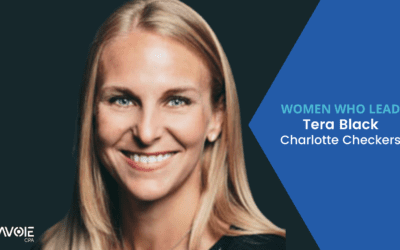
Tera Black sells fun for a living and has for the past 15 years. 

She doesn’t own a toy shop nor does she dress up as a birthday clown. Rather, Black is the Chief Operating Officer of the Charlotte Checkers, a minor-league professional ice hockey team based in the Queen City. 

“We’re the place where people come to take a break from everything else,” says Black, who previously served as the Chief Operating Officer for the San Diego Gulls. “I want people to feel entertained from the moment they walk into our building from the moment they walk out.”

After all, the rink is one of few places where kids and adults can bang on the glass and “use their outside voices for three hours straight,” says Black. In her opinion, the rink is also a place where women in the sports industry can fight for diversity and inclusion. 

We sat down with Black to hear more about her life on the ice. 


In 2016, you won the James C. Hendy Memorial Award for being the American Hockey League’s most outstanding executive. Months later, you received the Game Changer award from Sports Business Journal. Then, in 2017, you were named a Women in Business honoree by the Charlotte Business Journal. Considering all of this recognition, what accomplishment in your professional career are you most proud of?

That’s an easy question. Awards are wonderful but they don’t happen alone. I think something I do really well is surround myself with great people. For my entire career, I’ve had the privilege to build wonderful relationships. That’s what I’m most proud of. Every single one of my staff members is better at what they do than I could ever be. They work so hard and are such leaders in their respective fields. Make no mistake, any award I get is simply by putting all my team in the same room together and watching them shine.


You’ve been with the Charlotte Checkers for more than 15 years now. Have you stayed because of those relationships?

Yes. In sports, you’re typically in a place for five-ish years and then you move along to the next team or the next position. That’s the way the resume grows. But the ownership of the Charlotte Checkers is second to none and has provided me the opportunity to do great things in this great city of Charlotte. They’ve allowed me to do things differently. 

At the AHL level, we have the autonomy to be really creative. We can embark on a lot of philanthropic and charitable ventures. The player access is very liberal. They’re working hard at becoming good, solid members of the community while also becoming great athletes. They are building their community resume as much as they are their professional hockey resume. 

So there are lots of reasons why I’ve stayed with Charlotte Checkers — the ownership, the people, the city, the athletes and most importantly the front office team that we have assembled here. . 


You mentioned that the ownership of the Charlotte Checkers has allowed you to “do things differently.” Can you provide an example of how you have gone against the grain?

We work hard to recognize that every season is different and that what was successful one year, might not be the next. We rely on our employees to bring the great ideas to the table that will translate to successful opportunities to sell the sport that we love so much. In my opinion the game will sell itself, but getting people to try it the first time is up to us. The ownership has done a great job of giving us the autonomy to try new and different things in our market. Several years back we had a midnight game for example. The owner, (Michael Kahn) also is not a micromanager, so he’s open to unique ways of creating entertainment and just lets us do our things. We also had a flex work schedule long before Covid introduced the concept that people can truly be productive while not being glued to their office chairs. In this industry, the schedule can be grueling, so we really try and recognize that our people need the time to refresh.


How would you describe your leadership style?

I am not a micromanager. Each of my senior staff members runs their department like their own small business — they’re accountable for everything that happens within their department. I find that having each leader to make those decisions, rather than getting me to approve literally everything in the organization, works 99 percent of the time. When it doesn’t and a mistake is made, we all learn from that. 

I try to create an environment of trust. If they want to work from the moon, they can work from the moon. I know that they’ll get their jobs done. I love that because each department has a different approach. I don’t say, “Here are the guidelines.” They do it their own way. Out of that comes a really nice compilation of people and strategies that sometimes crossover. 

For instance, our whole staff is involved in planning the entire season. When you have 36 home games, it’s like planning 36 weddings. That being said, every single person is included in that process and has the opportunity to bring ideas to the table and see them through. 


Are there any challenges that come with offering your staff so much flexibility?

There’s a lot of responsibility on me and our senior staff to hire the right people who can work in that type of environment. There’s nothing wrong with it, but some people are very structured and need a certain set of guidelines and rules. I’m more fluid in my approach to leadership and try to understand how each person likes to be managed rather than applying a blanket approach across the whole organization. Everyone is motivated differently.


On an unrelated note, you’re a registered member of the Cherokee Nation, correct?

Yes. So there’s the North Carolina Band of Cherokee Indians and then there’s the Oklahoma Band. I am a member of the latter. My ancestors were full-blooded Cherokee Indians but clearly I’m not. My mother has Swedish heritage so that’s where the blonde hair and blue eyes come from.

I spent a lot of time in Oklahoma with my grandparents growing up learning about and absorbing the culture of the Cherokee Nation. It’s opened up a lot of perspective on where this country has come from and where it’s going. It’s a privilege to be connected to such an important part of our country’s history. I still have so much to learn.


Do you think that experience colors your filter of the world around you, specifically the business world?

For sure. That part of my personal history changes my perspective but so does the fact that I’m a female in a very male-dominated industry. I’m the only woman on the Board of Governors in my position. So when we’re talking about things as a league, it’s typically coming from the male perspective. It’s been a really awesome opportunity for me to suggest changes that otherwise would  have been seen through a predominantly male filter. My colleagues in this industry, specifically in the AHL have been so supportive of me in my career. I’m very lucky that way. 

The same goes for having a Native American history. It’s just another unique perspective that lends itself to being very open-minded to how we can shape our sport to serve a much bigger population. 


What’s something in the sport that you would personally like to see changed?  

Hockey is very focused on improving the diversity of our game. You’ll notice that hockey attracts a population that has grown up in traditionally non-diverse areas so exposing the sport to different cultures is something that the NHL and AHL are both working very hard on. 

Hockey is a relatively expensive sport to participate in. Just take Charlotte, for example. We have three and a half total sheets of ice in the marketplace. When you want to play, you have to rent the ice and typically it’s in the $350 an hour range. Then you’ve got the skates and all the protective wear. It’s all expensive. There are a lot of programs developing to help people get involved in the sport whether that be street hockey or roller hockey or intro to hockey for really young kids. The First Goal program is one of those and it costs just $250 and includes a full set of gear, 6 lessons and two tickets to a Checkers game for kids ages 5-9.

On a related note, I would also say that there are relatively few females in executive roles in professional hockey.  It’s not an easy industry to be in, especially during your childbearing years, because of the time that’s required. I went through this myself. I had two kids during the hardest part of my career. 

If we want to populate our industry with great women who are talented, we have to be aware of the fact that females need the latitude to have flexible schedules in the years that they are growing their families. Flexibility gives women the opportunity to be great mothers, great spouses, and great executives. 


What’re some other examples of how you’ve changed your company’s culture to accommodate mothers? 

I’m taking this approach with both men and women because they share the responsibility of parenting and it is very important to me to support them through the years they are growing their families. It is also very helpful in helping me retain their talent. For example, one of our male executives has three young kids and another has two. They never asked about paternity leave because they didn’t have to. I have told them from the very beginning, “You are extraordinarily important to this team and this is a really important time in your life. Time is a currency you cannot earn more of, especially when it comes to raising your kids. So do what you need to do to be good at both.” 

A dad’s work-life balance is important too because his responsibility as a father is equally as important as his wife’s responsibility as a mother. Our environment is all about the opportunity to be a great parent and have an enjoyable productive working environment. 


That’s wonderful. Speaking of talent retention, you have been with the Charlotte Checkers since 2006. How do you stay engaged after having been with the same company for so long?

My philosophy is this: Life is the pursuit of happiness created by a collection of experiences.. And I have enough, right where I am. I am very, very happy.  I’m in a unique industry. We can be very creative with how we design our games and our entertainment opportunities. Every year is different. We’re always thinking about different ways we can use sports to not only give people a break from reality, but also to unite people. It has been a remarkable career for me thus far. 

Of course, it’s up to me to not become stagnant. It’s not up to my employer to keep me happy and motivated. It’s up to me. And I have enough — I love it here. 


That’s such a nice reminder that job satisfaction doesn’t always translate into dollars. 

Definitely. I have a quote on my wall from Marlene Dietrich and it says, “Earning a great deal of money does not necessarily make you rich.” You need to make money — that’s how this world works. But filling your life and your environment with all of the other things that bring you joy makes that monetary quest far less important.


What’s a new skill you are learning right now? 

My husband is teaching me how to play chess. I’m at that age now. I’m starting to worry about brain health and my mom has Alzheimer’s. Chess is just helping my gray matter to be a little bit less rigid. It requires so much dynamic thinking. There are so many things happening on the board while you play. It’s like a microcosm of life.

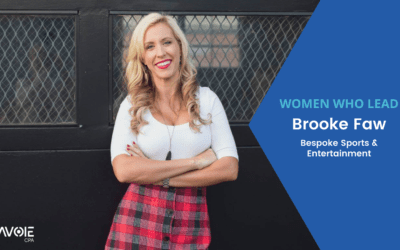
Women Who Lead: Brooke Faw with Bespoke Sports & Entertainment

Women Who Lead: Brooke Faw with Bespoke Sports & Entertainment

Each #WomenWhoLead feature will be showcased on a wall mural in South End Charlotte. If you know a woman leader who you want to feature on the wall, please click the button to nominate her.

Eight years ago, Brooke Faw posted a picture of Mary Tyler Moore on her Facebook page. In the caption, she talked about how she knew she was going to make it after all. Earlier that day, Brooke met Mike Boykin (her current boss) at an event. (Boykin was running a different agency at the time.) “I said to him, ‘One of these days I’m going to work for you.’”

One year later, TimeHop resurfaced Faw’s Mary Tyler Moore post. It was the same day that Faw called Boykin to accept the offer and work for Bespoke Sports & Entertainment

“I am a very emotional person so I started crying,” says Faw. “I called Mike and I’m babbling about Mary Tyler Moore, and he’s like ‘Did she die? I’m very confused.’ And I’m like, ‘No! Mary Tyler Moore! I’m coming to work for you!’”

After joining Bespoke Sports & Entertainment, Faw transitioned from manager to director to her current role as vice president. We spoke with Faw about her decision to join an up-and-coming agency and her experience working in sports.


You started your career as a kindergarten teacher and a high school basketball coach, is that correct? 

Yes. 


And now you’re the Vice President of Client Experiences. When I look at how you got from point A to today — from teaching to working for a nonprofit to working for a hospital —it seems like you’ve always had a passion for community. 

You know it’s funny, I’ve never put it that way but that’s actually the perfect way to put it. 

Yes, I’ve always had a passion for helping in any way that I can. Obviously being a kindergarten teacher, there’s a lot of that that goes into it. Then, I was a director of a nonprofit for Earth Fare and we did a ton in helping people live healthier lifestyles. Later I moved over to running sports partnerships for a hospital system in which one of the best things was bringing athletes to our Children’s Hospital. 

Now, on the agency side, I love the fact that I can work on multiple projects, and everyone always kind of rolls their eyes when we’re in brainstorms because I’m like, “Okay, and what’s the charity component of this?” Everyone’s like, “Here comes the community relations girl.”

But you know, every brainstorm and every client that I work on, we do something that gives back or helps people or sends a message that just makes this world a better place. Because, why else work if you’re not trying to work towards that?


Is it fair to say that you’ve also always been in love with sports throughout your career? 

So, I will tell you a personal story that hopefully the women reading this can learn from. Learn from my mistakes! 

When I went to college, I wanted to be an ESPN reporter. I love sports. I love to talk. Put them together and it’s perfect. That’s what I was going to do, that was my dream. 

At the time I was engaged — yes, engaged at 19, don’t judge me — I was engaged to a guy who just really wanted the white picket fence and the yard full of kids. When you grow up in a place like I grew up in, in Indiana, I was like, “Absolutely.” So I changed my major to teaching. 

We subsequently got married and tried for several years to have children, but I was told that I was never going to be able to have a child. And so we separated.

So here I was at 24, divorced and having this quarter-life crisis. And I just decided right then and there that I wanted to do something in sports. I wanted to pursue that goal. The 18-year-old in me wanted to do it, but that girl listened to a boy instead of actually doing what I wanted to do. This girl was going to do it differently! 

I moved to North Carolina and found a teaching job. I taught a lot of kids who had parents who worked in NASCAR. And so I started learning about the roles and responsibilities and different things that NASCAR does and started volunteering for drivers and their foundations and just fell in love with that world.

So I met some who introduced me to some folks at Earth Fare, which is how the Community Relations and nonprofit world started for me. That job moved to Asheville. Ironically enough, I’d gotten remarried and had my son and didn’t want to move him to Asheville. 

I took some time off and thought I was gonna be a stay-at-home mom for a minute. That lasted all of about six weeks because that job is the hardest job in the world.

And so I decided to get back into sports. I loved my community relations nonprofit job but I really wanted something in sports to kind of show everyone that I could do it, you know?

So when that sports position became open at the hospital, I was lucky enough to have a lot of people put their names out for me and say “Hey, you really need to talk to this girl.” 


When you joined Bespoke Sports & Entertainment, it was an up-and-coming agency. It can be risky joining a small business that’s just starting out, so how did you make the decision to take a leap of faith? 

I take educated risks. 

So, yes, you’re completely correct in that leaving a huge corporation that I loved to go work for two men who basically were footing the build themselves to start up this agency was a very risky picture. 

However, if you knew those two men, and if you knew what kind of men they were and the reputation they had in the sports world, the number of people that were ready to do anything to help them because they had helped others, you knew that it was a risk but it was an educated risk.

I knew even if the agency failed, they would do everything in their power to get me in a position that I would have never even dreamed of because they were so grateful for me coming over and being a part of their team. If I hitched my wagon to theirs, no matter what happened with the agency, it was going to be a good experience. 

So I guess the answer to your question is, I look at the people. The type of person that you work for is so important. If I worked for someone who didn’t have morals or ethics, someone who would undercut people just to make a buck, I wouldn’t be able to live with myself. That’s just a personal decision for me. But the fact that I knew that these men were just solid gold, I was like, “I have to go learn from them.”


I’m interested in hearing a little bit about being a woman in the sports industry. Women and sports have a complicated history, and I’m sure that plays out in your world too. Are there any barriers that you know are different for women in your industry? 

Forgive me because I’ll probably cry talking about this, but it is something that I am so passionate about.

I was at a meeting out of town and I had a picture of my son on my desktop. I opened my computer to give the presentation, and people were like “Oh my gosh, your son is so cute! Who’s taking care of him if you’re here?” I can guarantee you that had I been a man, not one person would have asked me “Who’s taking care of your son while you’re giving a business presentation?”

So the societal thought that when women have kids they must be at home with them is killing women in sports. There are very few women over the age of 40 in sports. There are a ton of women in their twenties. But as they start talking about having families, they drop like flies to the point where I came into the sports industry at 25 and was looking for that late 30’s woman to be that mentor to look up to and ask, “Okay, how did you do it all?” And there really wasn’t one. And I searched. Hard. 

I asked my bosses, “Find me a woman mentor who is married, who has children, and is still able to be a boss in the sports world.” They found women who were single or who were married without kids. But they could not find anyone that was all those things and still worked in sports effectively. 

And so seven years ago, I set out and said “I am going to be that woman.” That is my path, that is my calling.

Another barrier that women have is the crap we have to put up with just to do our job. 

If you follow a woman who works in sports around for 24 hours, you would be embarrassed at the way that she is looked at, the way she is talked to, the way she is treated. Not by all men — let me be fair, not by all men — but by enough that it is really noticeable.


I like hearing how you set out to become the role model that you didn’t have but wished you did. 

I think our biggest issue as women is when there’s a spot at the top, in my opinion, a woman feels like if she brings any other women up with her she’s gonna lose her spot because there’s only one. 

I really think my generation, hopefully, will be that generation that finally says, “No, we don’t want to be the only woman in the room. We want diversity of thought.”  

The general consumer is a woman. That’s who people want to market to. Every company wants the female perspective, but their problem is they go ask a roomful of men for it. And so we need more women, especially in the marketing world and especially in the sports marketing world, to be at the table. Otherwise, we’re going to keep coming up with the same ideas using the same thought process.

What is a new skill you’re learning right now? 

Right now I’m leading a team. When I started I was a team member. Now I’m leading the team and drawing that line between being friends with people and being a boss and making sure people are getting things done. It’s a very hard line for me because I just want to be nice to everybody and I just want everybody to like me. But I’ve learned that being likable is not always as effective as being respected. 

So I’m really working hard on not just giving my team the answer that’s going to make them like me, but giving them the answer that’s going to help them grow. I can’t conquer this world on my own. I need to create a whole bunch of teammates that can think and act on their own, and if they’re always coming to me because I’m not teaching them anything, then we’re never going to get there. I’m incredibly proud of the team we’re building and this is just the beginning!